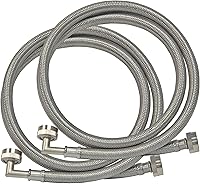
Stainless Steel vs Rubber Washer Hoses: Which to Choose? (November 2026)
Choose stainless steel braided hoses if you want a visible reinforcement layer, or rubber hoses if flexibility and easy inspection matter more. Check the hose condition, fit and washer manual before replacing either type.
On this page (7 sections)
- Stainless steel vs rubber washer hoses: what is the difference?
- Which hose fits a tight laundry space?
- Which type should you choose?
- When do washer hose washers matter?
- How can you reduce leak risk after installation?
- Does a braided hose last longer than a rubber hose?
- How should you choose between rubber and stainless steel?
Choose stainless steel braided washer hoses for an added reinforcement layer, or rubber hoses for flexibility and easier visual inspection. In the stainless steel washer hoses vs rubber choice, the hose's condition, fit and installation space matter as much as its material.
A braided hose has a visible metal outer layer around an inner hose. A rubber hose is generally more flexible, which can help when the washer sits close to a wall or the connections are awkward to reach.
Neither type is maintenance-free. Check hoses and fittings for leaks or visible damage, and follow the washer and hose makers' guidance for installation and replacement.


Stainless steel vs rubber washer hoses: what is the difference?
Stainless steel braided hoses have a metal outer braid, while rubber hoses have a more flexible exterior. The braid adds reinforcement, but the hose still depends on its inner tube, end fittings and seals.
Rubber hoses bend more easily around tight spaces. That can make them simpler to route, but a hose compressed behind the washer can still kink or strain a connection.
Stainless steel braid can make damage to the inner hose harder to see. Look over the full length, check for moisture at both fittings, and move the washer only as much as needed for a clear inspection.
Which material is easier to inspect?
A rubber hose makes cracks, bulges and surface wear easier to spot. Check the hose in good light, including the sections near the fittings and the spots that may rub against the wall or appliance.
The braid on a stainless steel hose can hide some changes in the inner hose. Look for fraying, rust, crushed sections or a loose braid, and check for leaks around the ends.
Don't rely on appearance alone. Moisture, a persistent drip or a damaged fitting calls for prompt attention, even when the rest of the hose looks intact.
Which hose fits a tight laundry space?
Rubber is often easier to route in a cramped space because it bends more readily. Measure the gap behind your washer and leave enough room for the hose to curve without being pinched.
A hose that's too long can bunch up. One that's too short can pull at the fittings when the washer moves or vibrates.
Measure the route from the water supply valves to the washer connections, allowing a gentle curve at each end. Our guide to how long washing machine hoses should be explains what to measure before you choose a replacement.
If you're setting up a washer with a split water connection, see our guide to the best washing machine Y hose splitter. Confirm that the splitter and hoses match your washer's connections and installation instructions.
Which type should you choose?
Choose rubber for easier routing and inspection; choose braided stainless steel when you want an outer reinforcement layer. In either case, buy a hose that fits the washer and water supply connections and follow the installation instructions.
Rubber may suit a tight installation where a broad curve is hard to fit. Braided stainless steel may suit you if you prefer an outer layer around the hose, provided you can inspect the braid and reach both connections.
Don't choose by material alone. Hose length, fitting compatibility, access for inspection and the washer maker's directions affect whether a specific hose is a practical fit.
What should you check before replacing a hose?
Check the connections at the wall and washer, then measure the route between them. Look for leaks, cracks, bulges, corrosion, fraying or fittings that no longer sit securely.
Use the hose type and connection details recommended for your washer. Our guide to GE washing machine hoses can help if you have a GE washer and need to compare options for that brand.
Don't reuse a hose simply because it still reaches. If it shows damage or doesn't fit securely, replace it with the right type and length.
When do washer hose washers matter?
A hose washer needs to match the hose fitting; general-purpose sealing washers aren't a substitute. The washer inside a washing machine hose connection helps seal that joint, so use the part specified for the hose.
A hardware washer made for roofing screws or construction fasteners has a different shape and job. The Party Animals EPDM bonded sealing washers are sized for screw applications, so they aren't replacements for washing machine hose gaskets.
The Swpeet bonded sealing washer assortment also covers screw and bolt sealing applications, not washer hose fittings. Check the exact hose connection and use a compatible hose washer.
How can you reduce leak risk after installation?
Install the hose according to the washer and hose instructions, then check both connections for leaks. Keep the valves and hose ends reachable so you can inspect them and shut off water if needed.
Avoid twisting the hose while tightening a fitting. Make sure the hose follows a smooth path, doesn't press against a sharp edge and isn't trapped between the washer and wall.
After connecting it, turn the water on and look for moisture at both ends. Check again after the washer runs, then inspect the area from time to time.
If you see a leak, stop the water and address the connection or hose before using the washer again. A braid or thick rubber exterior doesn't make a leaking joint safe to ignore.
Does a braided hose last longer than a rubber hose?
Material alone can't tell you how long a washer hose will last. Wear depends on the hose, installation, water conditions and how often it is moved or strained.
A braided outer layer offers reinforcement, but it doesn't mean the inner hose or fittings cannot fail. Rubber can be easier to examine, but visible damage still means it's time to replace the hose.
Use the replacement interval recommended by the hose maker, and check the washer manual for any additional guidance. Replace a hose sooner if you notice damage or a leak.
How should you choose between rubber and stainless steel?
Pick rubber if flexibility and easy inspection are your priorities; pick stainless steel braid if you prefer an outer reinforcement layer and can inspect it regularly. Match the hose length and connections to your washer, then follow the manufacturer instructions.
Before buying, measure the route, check the fitting type and make sure you can access both ends after installation. If you're also comparing the washer itself, our guide to choosing a washer and dryer brand can help with that decision.
Choose based on the actual installation and hose condition. A suitable hose that isn't kinked, strained or leaking is the practical choice, whether its outer material is rubber or braided stainless steel.
Frequently asked questions
Are stainless steel washer hoses better than rubber?
Stainless steel braided hoses have an outer reinforcement layer, while rubber hoses are more flexible and easier to inspect. Neither material makes a hose permanent or removes the need to check for leaks, wear and correct connections.
Choose by installation space, hose condition and the washer maker's instructions.
How often should washer hoses be replaced?
Replace a washer hose when it leaks, bulges, cracks, corrodes or shows damaged fittings. Follow the hose maker's replacement guidance even if you don't see damage, since age and water conditions can affect hoses.
Keep the connections accessible so you can inspect them periodically.
Can I use rubber washers from a hardware kit on a washer hose?
Use only washers made to fit the washing machine hose connection. Roofing or screw sealing washers are a different shape and purpose, so they may not seal a hose fitting.
Check the hose manual or choose a replacement washer specified for your exact hose.
Do stainless steel braided hoses prevent flooding?
A braided outer layer can reinforce a hose, but it doesn't guarantee that leaks or flooding cannot happen. Fittings can loosen, seals can wear, and a hose can still be damaged.
Inspect both ends and follow the washer and hose makers' installation and replacement guidance.