Sodium Percarbonate vs Oxygen Bleach: Difference? (November 2026)
Sodium percarbonate is an ingredient, while oxygen bleach is usually a finished cleaning product built around oxygen-releasing compounds. Pure sodium percarbonate gives you a simple powder, while formulated oxygen bleach may add other ingredients, a scent, directions and laundry-focused features.
On this page (9 sections)
- Sodium percarbonate vs oxygen bleach: what is the difference?
- How does sodium percarbonate work in laundry?
- What makes formulated oxygen bleach different?
- Which product suits a laundry-only routine?
- Which product suits a pure sodium percarbonate routine?
- Is sodium percarbonate better for colors?
- Which one is easier to measure?
- Are Vanish and OxiClean sodium percarbonate?
- Which should you choose?
Sodium percarbonate is an oxygen-releasing ingredient, while oxygen bleach is usually a finished cleaner that may contain sodium percarbonate plus other ingredients. The best choice depends on whether you want a simple powder for flexible cleaning or a laundry product with specific directions, scent and machine guidance.
The two terms overlap because sodium percarbonate releases oxygen when mixed with water. That oxygen-based action can help lift stains, odors and grime without chlorine bleach.
The important difference is the formula around the active ingredient. Pure sodium percarbonate gives you a focused powder.
An oxygen bleach laundry booster may also include sodium carbonate, a scent, a scoop, load guidance or claims about HE machines and colors.
This comparison uses product specifications and stated uses. We did not test these products.

Sodium percarbonate vs oxygen bleach: what is the difference?
Sodium percarbonate names the ingredient, while oxygen bleach often names the finished cleaning product. Sodium percarbonate is commonly used to make oxygen-based cleaning powders, but a packaged oxygen bleach formula can contain more than that one compound.
A pure sodium percarbonate powder is useful when you want to decide how to apply the ingredient across several cleaning tasks. You still need to measure it carefully, dissolve it as directed and check whether the surface or fabric can handle oxygen-based cleaning.
A formulated oxygen bleach is more guided. Its label may explain laundry use, color care, machine compatibility, scent and stain treatment.
That can make it easier to add to a regular washing routine.
The terms also vary by brand. Nellie's Oxygen Brightener lists sodium carbonate and sodium percarbonate as active ingredients.
Ecoxall Premium Sodium Percarbonate Bulk is described as pure sodium percarbonate powder.
How does sodium percarbonate work in laundry?
Sodium percarbonate activates with water and releases oxygen that can help brighten fabric and lift common stains. It is used as a laundry booster rather than as a replacement for every part of a wash routine.
Once dissolved, the oxygen action works alongside your regular detergent to break down the kind of residue that makes fabric look dull. That support matters most for everyday dinginess, where repeated soil and oils build up over time.
It can help with stains from food, coffee, wine, grass, oils and general dinginess, depending on the formula and how the garment is washed. Different products set out different uses, so the label for the exact powder you own should guide your choice.
It does not mean every stain will disappear in every load. A fresh food mark and a stain that has dried and set into the fibres may respond very differently, even in the same wash.
Water temperature, soak time, fabric type and stain age all affect the result. Hot water can help some powders work as directed, while a delicate fabric may need a cooler approach, which is why the care label comes first.
For a pre-soak, following the stated time and amount matters more than adding extra powder in hope of a faster result. Leaving fabric to sit too long can be unhelpful, especially if the garment has a dye or finish that needs care.
Read the product directions before adding powder to a full load, especially when using a pure ingredient rather than a finished laundry booster. Pure powders leave more of the measuring and use decisions to you, while formulated boosters often tie the amount to a standard load.
It also helps to think about the wash as a whole, not just the booster. The detergent you already use, the load size and whether the stain was treated promptly all shape what the oxygen action can do.
For a broader overview of detergent types and stain products, see our guide to laundry detergent.
What makes formulated oxygen bleach different?
Formulated oxygen bleach gives you a product designed around a use, not just a single active powder. The added ingredients can affect scent, concentration, handling, machine guidance and the way the product fits your routine.
Nellie's combines sodium carbonate and sodium percarbonate in a concentrated, unscented powder. It is described as chlorine free, phosphate free, septic safe and compatible with HE and standard washing machines.
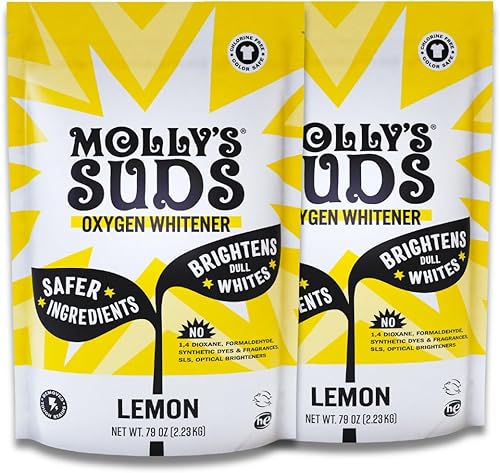
Molly's Suds Oxygen Whitener is a chlorine-free formulated powder with pure lemon essential oil. It comes as 2 bags of 79 oz each, for 158 oz total, and includes a measuring scoop.
A formula may be easier for a laundry room because its directions are built around clothes and wash loads. A pure powder may be better when you want one ingredient for several cleaning jobs and are comfortable following separate instructions.
Which product suits a laundry-only routine?
Choose a formulated oxygen bleach when simple laundry directions matter most. A laundry-focused product can reduce guesswork around load use, machine compatibility and whether the product is scented or unscented.
Molly's Suds Oxygen Whitener suits households that want a large supply and a scented alternative to chlorine bleach. The package contains 2 x 79 oz bags and a measuring scoop.
It is described for whites, bright colors and mixed-color fabrics, but the product instructions still call for testing an inconspicuous area first. It should not be used on wool, leather or silk.
The product also describes stain treatment by soaking stained items in hot water with 2 scoops for up to 2 hours, or by applying a paste to a stain before laundering. Those methods require attention to the fabric and the stain before use.
Nellie's Oxygen Brightener suits buyers who want an unscented laundry booster with a defined scoop routine. It is a 60 oz concentrated powder described for 100 scoops.
Its active ingredients are sodium carbonate and sodium percarbonate. That makes it a clear example of the difference between an ingredient and a formulated oxygen bleach product.
Nellie's describes the powder as chlorine free, phosphate free and septic safe. It is also described as color safe, but testing an inside seam is still a sensible step for a new garment or unfamiliar dye.
For step-by-step laundry instructions, read How to Use Oxygen Bleach in Laundry.
Which product suits a pure sodium percarbonate routine?
Choose pure sodium percarbonate when you want a simple ingredient and broader control over how you use it. This option can suit laundry, odor control and selected household or outdoor cleaning tasks, but it requires more care with directions.
Ecoxall Premium Sodium Percarbonate Bulk is a focused 2 lb powder. Its stated uses include laundry stain boosting, indoor cleaning and outdoor surfaces such as decks, patios and walkways.
This choice suits a smaller household supply or someone who wants to try pure sodium percarbonate without storing a larger 5 lb bag. It does not have the same laundry-specific formula details as a concentrated booster such as Nellie's.
Use it as a measured powder and keep it dry. A pure ingredient does not automatically tell you the right amount for every fabric, surface or cleaning task.
Supply Masters Sodium Percarbonate Powder 5 lbs fits frequent multipurpose cleaning. The 5 lb amount gives you more powder for repeated laundry and household jobs, while the resealable bag is designed to protect it from moisture.
Its stated uses include carpets, upholstery, tile, grout, bathrooms, kitchens, decks, patios and outdoor surfaces. It is also described for specialized tasks such as brewing equipment washing, drain deodorizing and RV or boat cleaning.
That range makes it a practical fit for a household that wants one oxygen-based powder for more than clothing. It also means you should keep separate notes for each use and follow suitable surface directions rather than treating every material the same way.
Is sodium percarbonate better for colors?
Neither label guarantees color safety for every garment. A finished oxygen bleach may include color-safe directions, while pure sodium percarbonate requires you to follow its own instructions and test the fabric.
The words non-chlorine and oxygen bleach describe the cleaning approach, not a promise for every dye. Two garments in the same load can have very different colour stability, even when they look similar on the surface.
Start with the care label and sort the load with that guidance in mind. Keep deep colours, new garments and items with prints or trims separate until you know how they respond.
Test a hidden area when the garment is valuable, dark, new or made from a blend you have not cleaned with oxygen bleach before. A seam, hem or inside pocket gives you a lower risk place to check for fading or colour change.
Leave the test area for the time the product suggests, then rinse and dry it before judging the result. A colour that looks fine when wet can still shift once it dries, so a quick glance may not be enough.
Avoid assuming that non-chlorine means every fabric is suitable. Molly's Suds specifically says not to use its Oxygen Whitener on wool, leather or silk, which shows why fabric type needs its own check.
That warning also applies to blends and finished fabrics, where a surface coating or added trim may react differently from the main cloth. When in doubt, a smaller test load is safer than treating a full load as the test.
For whites, the same care still applies in a different way. Yellowing and greying can improve with the right product, but an older garment with weakened fibres may not tolerate repeated brightening washes.
Consider how often you plan to use the booster, not just whether to use it once. A colour-safe routine may suit occasional boosts better than adding powder to every load as a matter of habit.
Storage and measuring also affect consistency from wash to wash. Keeping powder dry and using the amount stated for the load helps you avoid overuse on colours that do not need a strong treatment.
If your main concern is colored clothing, see Can You Use Oxygen Bleach on Colors? That guide can help you think through dye stability, fabric type and testing before a full wash.
Which one is easier to measure?
A formulated laundry booster is usually easier when it includes a scoop and clear load directions. Pure sodium percarbonate can be just as simple once you establish a safe routine, but the product label matters more.
Molly's Suds includes a measuring scoop and gives a specific 2-scoop soak method for stain treatment. Nellie's describes a one-scoop routine alongside regular detergent and identifies 100 scoops in the package.
Pure powders have fewer formula details to guide a laundry beginner. That does not make them a poor choice, but you should avoid copying the amount from another brand because concentration and intended use can differ.
Keep oxygen powders dry and sealed between uses. Moisture can affect powder handling, and a damp scoop can make the container harder to use cleanly.
Are Vanish and OxiClean sodium percarbonate?
Vanish and OxiClean are brand product lines, so their exact formulas depend on the specific product. The brand name alone does not prove that a product is pure sodium percarbonate or that every version has the same ingredients.
Brands often use the same name for powders, liquids, pre-treaters and wipes, and each format can be built for a different job. That is why the front of the pack is only a starting point for comparison.
Compare the active ingredients and directions on the exact package. Look for the full ingredient list, not just a headline claim about oxygen or bleach action.
Look for whether it is a laundry booster, a pre-treater, a surface cleaner or a product with other cleaning ingredients. A product made for a spot treatment may not be intended for use throughout a full wash.
Check the amount, form and machine guidance as well, because they show how the product is meant to be used. A concentrated powder, a liquid and a spray can all carry the same brand name while working in different ways.
Fabric and surface warnings are another useful clue to the intended use. If the label sets out limits for certain fibres or materials, that tells you more than the brand name on its own.
Do not assume that a formula you used years ago matches the one on the shelf today. Recipes and product ranges can change, so the package in your hand should be the reference you trust.
That same care helps when comparing across brands in this guide. A pure sodium percarbonate powder and a formulated oxygen brightener may both release oxygen, but their other ingredients and directions can differ a lot.
Our guide Is Vanish Oxygen Bleach? explains how to assess that brand. You can also read Is OxiClean Oxygen Bleach? before treating the brand name as a formula.
Which should you choose?
Pick pure sodium percarbonate for ingredient control and broad cleaning use; pick formulated oxygen bleach for clearer laundry guidance. The right choice is the one that matches your fabrics, storage space, scent preference and number of cleaning jobs.
Choose Molly's Suds if you want a large, lemon-scented chlorine-free whitener with a scoop. Choose Nellie's if you want an unscented, concentrated booster with 100 scoops and HE compatibility.
Choose Ecoxall if you want a smaller 2 lb supply of pure sodium percarbonate. Choose Supply Masters if you want 5 lbs and a resealable bag for repeated laundry and household surface cleaning.
In the sodium percarbonate vs oxygen bleach decision, start with the formula, not the marketing name. Check the ingredients, intended uses, fabric warnings and machine guidance before adding any powder to your laundry.
Frequently asked questions
Is sodium percarbonate the same as oxygen bleach?
Sodium percarbonate is one common oxygen-releasing ingredient used in oxygen bleach products, but the terms are not always identical. A bag labeled pure sodium percarbonate focuses on that single powder, while a finished oxygen bleach may combine sodium percarbonate with other ingredients, scents or laundry directions.
Which is stronger, sodium percarbonate or oxygen bleach?
Neither label alone proves that one is stronger. Pure sodium percarbonate gives you a concentrated ingredient, while an oxygen bleach formula may be designed for a specific use and include other ingredients.
Follow the product directions, water temperature guidance and fabric warnings for the exact powder you choose.
Can you use sodium percarbonate on colored clothes?
Some sodium percarbonate and oxygen bleach products are made for colors, but color safety depends on the exact formula, fabric and dye. Test an inside seam first, follow the package directions and avoid assuming that pure powder has the same instructions as a finished color-safe laundry booster.
Is oxygen bleach safe for HE washing machines?
Oxygen bleach can be suitable for HE machines when the product says it is compatible. Molly's Suds and Nellie's products listed here are compatible with both HE and standard machines.
Use the recommended amount and add the powder as directed so it dissolves and rinses properly.
Can sodium percarbonate clean more than laundry?
Yes, some sodium percarbonate powders are described for household and outdoor surfaces as well as laundry. Ecoxall includes indoor and outdoor cleaning uses, while Supply Masters lists carpets, tile, decks, kitchens and outdoor surfaces.
Check surface and material warnings before applying any powder.