Can You Use Oxygen Bleach on Colors?
Yes, you can use oxygen bleach on many colorfast fabrics. Check the care label, test a hidden area, and avoid fabrics that the product or garment instructions restrict.
On this page (9 sections)
- Can you use oxygen bleach on colors safely?
- How do you test oxygen bleach on colored fabric?
- Which colored fabrics need extra care?
- How should you use oxygen bleach on colored laundry?
- Which oxygen bleach is best for a large laundry routine?
- Is a chlorine-free oxygen powder a good choice for colors?
- What should you avoid when using oxygen bleach on colors?
- What else affects colored laundry?
- So, can you use oxygen bleach on colors?
Yes, you can use oxygen bleach on many colorfast clothes. Check the care label, test a hidden area, and follow the powder's directions before treating the whole garment.
That routine matters more than the product name. Some dyes hold in a normal wash yet shift when powder sits against them in warm water for longer.
A hidden test answers that question on your garment before stain treatment begins.
Oxygen bleach differs from chlorine bleach. It releases oxygen in water to brighten laundry, reduce odors, and lift common stains without strong chlorine action.
Detergent still does most everyday work. Treat oxygen bleach as an extra step for stains, dinginess, or lingering odors on items that permit it.
That order helps you use the right amount instead of expecting one scoop to fix every problem.
Colored clothes suit it only within limits. Bright prints, dark denim, and older garments can react differently from a plain cotton shirt.
Read the garment label first, then the powder directions, and let both guide temperature, time, and amount.
For delicate pieces, a gentle wash without an extra bleach step may be safer. Oxygen bleach works best when you confirm colorfastness each time rather than assume it.
Can you use oxygen bleach on colors safely?
You can use oxygen bleach on colors when the fabric is colorfast and the care label allows it. Colorfastness means the dye is less likely to run, fade, or transfer during washing, but no color-safe claim applies to every garment.
Start by reading the care label. Do not use a treatment that conflicts with the garment's instructions, especially when the label says not to bleach or gives special washing limits.
Then check the oxygen bleach directions. Some powders are described as safe for colorfast laundry, but that does not remove the need for a hidden-area test.
How do you test oxygen bleach on colored fabric?
Test oxygen bleach on an inside seam, hem, or another hidden spot before washing the full garment. Mix and apply the solution as directed, then check the area after the stated treatment time.
Look for color loss, a lighter patch, dye transfer, roughness, or a change in the fabric finish. If the test area changes, rinse the garment and choose a different stain-removal method.
Test separately when a garment combines several colors. A bright trim, printed panel, or dark lining may react differently from the main fabric.
Which colored fabrics need extra care?
Dark, vintage, delicate, and poorly dyed items deserve the most caution. A color may appear stable during normal washing but still react to a stronger soak or concentrated powder.
Use extra care with wool, silk, leather, garments with special finishes, and any item whose label restricts bleaching. Do not assume that a fabric is safe because another garment with a similar color tolerated oxygen bleach.
Printed designs also need a test. The base fabric and the print can use different dyes, so inspect both areas when possible.
If you are still choosing a laundry product, our guide to laundry detergent explains how detergent, stain removers, and oxygen bleach fit different cleaning jobs.
How should you use oxygen bleach on colored laundry?
Dissolve the powder fully, use the correct amount, and avoid leaving colored clothes in solution longer than directed. Undissolved powder can create concentrated contact with one area of fabric.
Follow these general steps:
- Read the garment care label and the oxygen bleach directions.
- Test a hidden area and let it dry if the instructions call for a dry check.
- Dissolve the powder in water before adding the garment when directed.
- Treat the stain for the recommended time.
- Rinse or wash the item as instructed.
- Check the result before drying, since heat can make some stains harder to remove.
Use the water temperature allowed by the garment label. Hotter water is not automatically better for colored laundry, and heat can increase the risk of dye bleeding or fabric damage.
For a fuller process, see how to use oxygen bleach in laundry.
Can sodium percarbonate be used on colors?
Sodium percarbonate is an oxygen-based powder that activates with water. It can suit colorfast laundry, but the same rules apply: check the label, test first, and use the correct dilution.
Ecoxall Premium Sodium Percarbonate Bulk comes as a 2 lb, 32 oz pack of 1. Its title identifies it as pure sodium percarbonate powder, and its stated laundry uses include brightening whites, reducing odors, and helping remove coffee, wine, grass, and food residue.
Its powder format suits readers who want to measure an oxygen cleaner for a particular load or stain. It also has stated uses beyond laundry, including hard surfaces and outdoor areas, so store it carefully and keep laundry treatment separate from other cleaning tasks.
Choose it when you want a smaller bulk pack for occasional or regular laundry use. Skip it if you need a ready-to-use liquid or if your garment label does not allow oxygen bleach.
Which oxygen bleach is best for a large laundry routine?
A 5 lb powder makes more sense when you use oxygen bleach often and also clean other washable surfaces. The larger size can reduce how often you restock, but it needs dry storage and careful measuring.
Supply Masters Sodium Percarbonate Powder 5 lbs is a non-chlorine oxygen bleach alternative and stain remover. Its stated uses include laundry, carpets, tile, grout, decks, kitchens, and outdoor surfaces.
The 5 lb size suits busy households that use powder regularly. Its resealable bag is designed to protect the powder from moisture, which matters because damp powder can clump and become harder to measure.
Choose it when one oxygen-cleaning powder will serve several household jobs. Before using it on colored clothes, follow the garment label and test the dye instead of relying only on the product's color-safety wording.
For the chemistry behind this powder, read sodium percarbonate vs oxygen bleach.
Is a chlorine-free oxygen powder a good choice for colors?
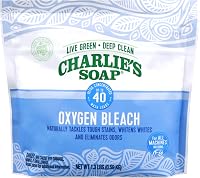
Charlie's Soap Oxygen Powdered Bleach is aimed at colorfast laundry and avoids chlorine. Its stated features include a chlorine-free formula, color-safe use for colorfast laundry, and no perfumes, fillers, or chlorine.
Charlie's Soap Oxygen Powdered Bleach suits readers who want a powder described as color safe for colorfast laundry. Charlie's Soap also describes it as residue free, hypoallergenic, and free of perfumes, fillers, and chlorine.
The package dimensions are 6.8 x 6.5 x 1.68 inches, with a listed package weight of 1.3 pounds. The product's stated household uses include washable surfaces, but follow the surface instructions and test an inconspicuous area for non-laundry cleaning.
Choose it when chlorine-free, unscented powder is a priority. For more detail, see charlie's soap reviews oxygen bleach.
What should you avoid when using oxygen bleach on colors?
Avoid pouring dry powder directly onto a wet garment unless the directions specifically allow it. A concentrated patch can react differently from a fully dissolved solution.
Do not mix oxygen bleach with chlorine bleach, ammonia, or other cleaners. Use one treatment at a time, rinse thoroughly, and keep powders away from children and pets.
Do not dry the garment until you have checked the stain and the color. If the stain remains, repeat only when the product directions and care label allow it.
Oxygen bleach is not the same as every product marketed as an oxygen cleaner. Compare product ingredients and directions, and read is OxiClean oxygen bleach or is Vanish oxygen bleach when deciding how those brands fit your routine.
What else affects colored laundry?
Fabric softener can leave a coating that changes how some fabrics absorb water and how stains respond to later washing. If the garment is denim, see should you use fabric softener on jeans before adding another laundry product.
Dryer sheets are a separate product category and should not be treated as oxygen bleach. If you have pets, review dryer sheets and dogs for the safety question around that product.
So, can you use oxygen bleach on colors?
Yes, but only after checking colorfastness and the garment instructions. Choose Ecoxall for a 2 lb pure sodium percarbonate pack, Supply Masters for a 5 lb multi-use powder, or Charlie's Soap for a chlorine-free powder described for colorfast laundry.
Each option fits a slightly different routine. The smaller Ecoxall pack can suit a smaller home or occasional stain treatment.
The larger Supply Masters bag makes more sense when you also clean washable surfaces around the house.
Charlie's Soap may appeal to readers who prefer a chlorine-free powder without perfumes or fillers. None of those choices removes the need for a test.
Product wording can describe intended use, but your garment label decides whether that use is allowed for the item in hand.
Use a hidden-area test for valuable, dark, delicate, vintage, or mixed-material garments. Check inside a seam or hem, and look at both the base fabric and any print or trim.
Let the test area dry before deciding, since wet fabric can hide a slight shift. If the dye changes, stop and use a milder method suited to the fabric.
Rinse the area gently rather than forcing a result with more powder or a longer soak.
Repeat a treatment only when the directions allow it. Some stains fade in stages, while others set if you keep pushing the same product.
Check the garment after each round and stop when color, texture, or finish looks off.
Store dry powder away from moisture and heat so it stays easy to measure. Damp powder can clump and make dosing less reliable for colored items that need care.
Keep the container sealed, use a dry scoop, and put it back promptly after pouring.
That careful approach keeps oxygen bleach useful without turning it into a gamble. You get brighter laundry and fewer lingering odors when the fabric allows it, and you protect the clothes you want to keep wearing when it does not.
Frequently asked questions
Can you use oxygen bleach on colored clothes?
Yes, oxygen bleach can work on many colorfast clothes, but check the care label and test a hidden area first. Follow the product directions, dissolve the powder fully, and stop if the test area changes color, texture, or finish.
Does oxygen bleach fade dark clothes?
Oxygen bleach may affect some dyes, especially on dark, poorly dyed, vintage, or delicate garments. A hidden-area test helps you see how the fabric reacts before treating the whole item.
Use cool or warm water when the care label allows it.
What fabrics should not use oxygen bleach?
Avoid oxygen bleach on fabrics restricted by the garment label or product directions. Take extra care with wool, silk, leather, garments with special finishes, and items that say not to bleach.
When instructions conflict, follow the garment care label.
How long can colored clothes soak in oxygen bleach?
Use the shortest soak time that removes the stain and follow the product directions. Long soaking can increase the chance of dye change or fabric damage, so check the garment during treatment instead of leaving it unattended for an extended period.