Washer Capacity in Cubic Feet: What the Number Means
On this page (14 sections)
- Drum Capacity Measures Space, Not a Guaranteed Load
- Keep Interior Capacity Separate from Room Fit
- Read Capacity Terms Without Treating Them as Standards
- Find the Rated Capacity Before Measuring the Drum
- Leave Room for the Washer’s Cleaning Motion
- Treat Bulky Items as Their Own Capacity Question
- Why a Tiny Load Can Still Be a Poor Fit
- Use Everyday Loads to Understand Your Capacity
- Don’t Let Hamper Size Set the Wash Limit
- Check a Load with Six Practical Questions
- Spot Capacity Problems by Their Pattern
- Use Capacity as a Planning Tool, Not a Challenge
- Conclusion
- Frequently Asked Questions
Washer capacity in cubic feet describes the volume of the clothes-holding space, not the weight of laundry you can always wash. It also doesn’t describe the machine’s outside size or give permission to pack the drum completely full.
The number is useful when you compare washers, but fabric bulk, basket shape, and the chosen cycle decide how a real load fits. A thick comforter and a pile of thin shirts can occupy similar space while behaving very differently when wet.
- Cubic feet measure volume, not pounds or kilograms.
- Capacity and cabinet dimensions answer different questions.
- Clothes still need free space to tumble or circulate.
- A bulky item’s care label matters as much as the drum number.
- The exact model’s instructions beat universal towel or basket estimates.
If you’ve wondered why a large-capacity machine still struggles with one load, start by separating the number on the specification sheet from the way laundry must move. That distinction makes capacity far more useful.
Drum Capacity Measures Space, Not a Guaranteed Load
A cubic foot is a unit of volume. In a washer specification, it describes the available clothes-container space under the measurement method used for that product.
It isn’t a promise that every item occupying that much space can be washed together. Laundry must move, wet through, rinse, and reach a stable arrangement for spinning.
Maytag separates drum capacity from exterior dimensions in its capacity guide. Keeping that distinction clear prevents two common mistakes: buying a machine that won’t fit the room and overfilling a machine that does.
Why Cubic Feet Cannot Be Converted Directly to Pounds
Volume and weight aren’t interchangeable without knowing what fills the space. A light puffy blanket and a dense stack of towels can fill a similar-sized hamper but weigh different amounts.
They can also absorb different amounts of water. The load that feels light when dry may not remain easy to balance once wet.
A universal “pounds per cubic foot” rule hides those differences. If a manufacturer provides a dry-load weight limit for a particular model or cycle, use that guidance instead of inventing a conversion.
Why the Same Number Can Feel Different in Two Washers
The shape and opening affect how you place laundry inside. A deep upright basket, a front-load drum, and a basket with a central post don’t handle bulky fabric in the same way.
Similar rated volumes can leave different paths for loading and movement. An item may go through one opening easily but need awkward folding to enter another.
Don’t confuse convenient access with an increased wash limit. The easier-loading design still needs the amount and arrangement of laundry its instructions allow.

Keep Interior Capacity Separate from Room Fit
Capacity tells you about laundry space; height, width, and depth tell you about the cabinet. You’ll also need the clearances and access described in the installation instructions.
A cabinet that fits an alcove may still lack room for hoses, an opening lid, or a swinging front door. Measuring only the body of the machine leaves those needs out.
Record the manufacturer’s required space rather than using a capacity label as a room-size shortcut. Moving and installation are separate tasks from deciding what fits in the drum.
Read Capacity Terms Without Treating Them as Standards
Words such as compact, large, and extra large can help organize a manufacturer’s range, but they aren’t enough for a precise comparison. Find the actual capacity and model-specific limits.
| Information | Useful for | Not a guarantee of |
|---|---|---|
| Drum capacity in cubic feet | Comparing interior volume | A fixed number of every garment |
| Cabinet dimensions | Planning appliance placement | All required installation clearances |
| Cycle load guidance | Choosing a suitable load | Permission to ignore care labels |
| Towel-count example | Getting a rough sense of space | The same count for all towel sizes |
| Large-capacity label | Understanding a product range | A universal industry size boundary |
Compare like with like whenever you can. A marketing example about towels is less useful than a clear manual statement about the load you’re actually planning to wash.
Find the Rated Capacity Before Measuring the Drum
Start with the model number, then look for the official specification sheet or owner’s manual. That is usually more reliable than trying to measure an installed drum yourself.
Do not use the door opening as the drum diameter. Its gasket and opening shape don’t necessarily match the space behind it.
If a model has a removable agitator, check how its capacity is described with the feature in use. Don’t assume removing a part changes the official rating by a number you can estimate visually.
What a Cylinder Calculation Can and Cannot Tell You
The geometry of a simple cylinder is volume equals pi times radius squared times depth. All measurements must use the same unit, such as feet, to obtain cubic feet.
That calculation is an approximation for an ideal shape. A real washer can have curves, lifters, a central post, and other features that make a tape-measure estimate differ from its rating.
You don’t need to reach into tight spaces, remove parts, or take the machine apart to settle the question. If the official capacity is unclear, ask the manufacturer with the complete model number.
Leave Room for the Washer’s Cleaning Motion
A washer’s job requires more than storing fabric. Front loaders need room for clothing to lift and fall, while top loaders need clothing to circulate around their wash mechanism.
If you compress laundry to use every visible inch, you may block that movement. Detergent and rinse water also need to reach the load rather than only the exposed surfaces.
Follow the manual’s loading picture and cycle instructions. A door or lid that closes without resistance isn’t proof that the load is suitable.
Treat Bulky Items as Their Own Capacity Question
A bulky item’s size, filling, and care instructions matter together. A bed-size name alone doesn’t tell you whether a comforter is safe for a particular washer.
Two queen-size comforters can differ greatly in thickness and construction. One may settle loosely while another fills the drum before it even becomes wet.
Check both labels and avoid tightly stuffing an item to make it fit. If the instructions are unclear or the item can’t move freely within the allowed loading guidance, use a suitable larger machine or professional care.
Why a Tiny Load Can Still Be a Poor Fit
Less volume doesn’t guarantee easier spinning. A single heavy item can gather on one side, leaving the washer with an uneven load.
A large drum doesn’t make that item distribute itself evenly. The machine may keep trying to rebalance or finish with clothing wetter than expected.
Follow the manual’s guidance for single items and balancing rather than automatically adding towels. Extra items must also be compatible with the garment, cycle, and allowed load.
Use Everyday Loads to Understand Your Capacity
Your regular laundry gives you better planning information than an abstract “family size” label. Think about the loads you actually keep separate for care reasons.
A household may have plenty of total laundry but still wash several smaller groups because colors, fabrics, or soil levels differ. A bigger drum doesn’t make incompatible items suitable companions.
Keep a simple note of the loads that regularly feel crowded, such as towels or weekly bedding. That reveals a real space need without guessing from the number of people in the home.
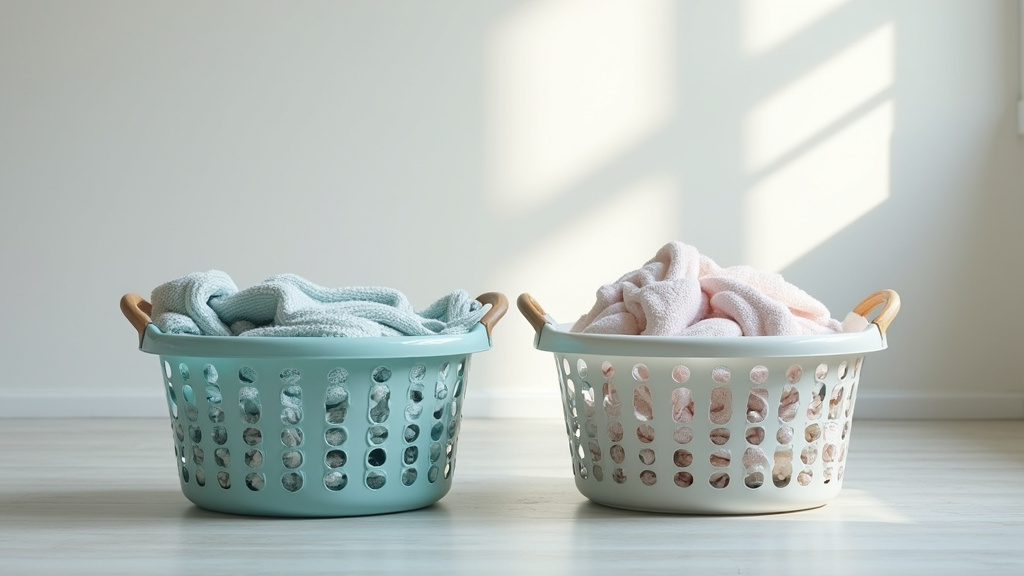
Don’t Let Hamper Size Set the Wash Limit
A hamper is a storage container, not a measured washer load. It may hold much more clothing than your machine can move well in one cycle.
Empty it into sorted groups before loading rather than treating one full basket as one automatic wash. This also gives you a chance to check pockets and separate tangled items.
If you change hampers, don’t assume the new basket represents the same amount. A taller or wider container can quietly turn a familiar routine into repeated overloading.
Check a Load with Six Practical Questions
Use these questions before adding the final item. They connect the rated space to a real wash without relying on a made-up weight conversion.
- Does the care label allow this item to be machine washed?
- Does the washer manual allow it on the selected cycle?
- Have you placed items loosely instead of pushing them down?
- Can the load move in the pattern the washer needs?
- Are heavy or bulky pieces arranged as the manual directs?
- Would splitting the load make the guidance easier to follow?
If you’re unsure, don’t use a long or aggressive cycle to compensate for a questionable fit. Solve the loading problem first, then choose settings for the fabrics and soil.
Spot Capacity Problems by Their Pattern
Repeated trouble only with one bulky or packed load can point toward a loading issue. Poor results with correctly sized ordinary loads may need a different explanation.
Residue, incomplete rinsing, or wet laundry can have more than one cause, so capacity isn’t a diagnosis by itself. Record the cycle, amount, fabric, and any displayed error.
Stop using the washer if it bangs severely, leaks, or shows another unsafe symptom. Don’t keep rerunning an unsuitable load as an experiment.
Use Capacity as a Planning Tool, Not a Challenge
The rated drum volume helps you compare space, but your aim isn’t to fill every cubic inch. Your aim is to finish a suitable load clean, rinsed, and ready for drying.
Keep the official model information together with any bedding or special-cycle guidance you use often. That makes future decisions easier than looking up broad capacity charts each time.
When a limit is unclear, ask a question tied to the actual item and model. “Can this washable comforter use this bedding cycle?” is more useful than “Is my washer large enough?” without any context.
Conclusion
Washer capacity in cubic feet describes interior volume, not a universal laundry weight or a promise that every bulky item will fit. Cabinet dimensions, cycle limits, and fabric care answer different questions.
Start with the exact model’s published capacity, then use its loading guidance for the actual items in front of you. Leave room for movement instead of treating the drum like a storage bin.
For your next load, check the care labels and separate anything that needs different handling. A suitable smaller load is a better use of the machine than an overpacked one that must be washed again.
Frequently Asked Questions
Does a higher cubic-foot number mean better cleaning?
It means more rated interior volume, not a higher cleaning score. The load still needs the right detergent, cycle, and room to move, and the washer must be operating correctly.
Can I estimate capacity by counting towels?
Towel examples can give a rough sense of space, but towel sizes and thicknesses vary. Use the exact model’s loading guidance rather than treating a published count as a universal limit.
Is a washer’s outside depth the same as drum depth?
No. Cabinet depth includes the appliance structure and components around the drum. Room planning also needs the manufacturer’s hose, door, and clearance requirements.
Does a comforter fitting through the door mean it is safe?
No. It must also be machine washable and meet the washer’s load and cycle guidance. An item packed tightly inside can fit through the opening without having enough room to wash properly.
Should I buy detergent based on cubic-foot capacity?
Use the detergent label and washer instructions for the actual load and soil. Drum capacity alone doesn’t tell you the right dose, and a large drum can still be washing a small load.


